NOTE: All OP page references refer to the UK hardback edition of OP. Page references to GF refer to the UK paperback edition.
Introduction
I believe that OP sets in motion a trend that had begun developing in PA and GF: the trend of Harry and Hermione becoming partners. They are in effect equals in leadership roles, and though Harry certainly remains the “hero,” I think that Hermione is increasingly filling the role of “heroine.” I think this partnership is a solid basis on which a romantic relationship can be based in later books and/or in the epilogue to the series.
Trend of Becoming Partners
1. Working in Tandem
Harry and Hermione work more as a partnership (and less as two members of a Trio) in OP than they have previously. When they are reading the Prophet article about Sirius, they shush Ron and continue to have their own conversation (257). Harry and Hermione obviously hadn’t clued Ron in on the conversation they had the night he made the Quidditch team regarding Umbridge and Harry’s scar, since Ron is utterly bewildered by this when the three of them are talking to Sirius in the fire (270).
Hermione takes the initiative with forming the DA, anticipating and countering Harry’s reluctance with powers of persuasion and calm certitude in his abilities (290-96). The two of them have a conversation about the similarity between the gold coins given to the DA members and the Dark Mark, another sign of a growing shared outlook (353). She also takes the initiative with arranging Harry’s interview with Rita Skeeter (“I want him given the opportunity to tell the truth”) (500). She seemingly sat through the interview with him. Harry himself indicates that talking about the events of that night in such detail was difficult, and therefore, Hermione may be privy to details or emotions from Harry that he hadn’t previously confided to both her and Ron (502).
Significantly, Harry and Hermione share in the key moments of the events depicted in OP as a pair. It is Harry and Hermione together who accompany Hagrid to the Forest to meet Grawp (604-618). It is Harry and Hermione together who steal into Umbridge’s office to check on Sirius’ whereabouts (651-653). It is Harry and Hermione together who accompany Umbridge into the Forest (660).
And, finally, Hermione is with Harry and Neville (both of whom may be integral to the final resolution of the series) when the group is split in two at the Department of Mysteries. Though she ultimately falls in battle so to speak, she doesn’t exit the scene immediately and gets in her fair share of hexes and curses before being taken out of action. In fact, they play off each other in turn, saving each other repeatedly: Hermione saves Harry with the Stupefy hex (694); Harry launches himself across the floor to prevent the Killing Curse from hitting Hermione (696); Hermione comes to Harry’s aid once again (696-97); and then the two of them work together with Silencio and Petrificus Totalus (698) before Hermione falls out of action at last.
These are all choices made deliberately by Rowling; in each case, Ron could have been included in the general scene without disruption of the plot or narrative. Instead, Rowling has chosen to keep Ron on the sidelines during integral events in OP, while pushing Harry and Hermione front and center. This trend of highlighting Harry and Hermione as a team or partnership began in PA, when it is Harry and Hermione as a pair who must save Buckbeak and rescue Sirius. This trend is solidified in GF by having Harry and Ron not speaking to one another for an extended period of time, so that Harry and Hermione work together to get him through the First Task. Though Ron certainly helped Harry in his preparation for theThird Task, Hermione’s contributions are possibly more note-worthy in some respects (the very fact that he knew the curses and hexes that helped save his life that night is attributable to Hermione’s sleuthing and research skills). And, of course, again, OP places Harry and Hermione together, working in tandem, at all the key moments in the plot. Their partnership is in the spotlight.
2. Daring Gryffindor Spirit
Hermione moves from still wincing at the sound of the name Voldemort early on (65) to using the name Voldemort frequently, starting in October when she first proposes Harry teaching DADA to other students (294). “It was the first time she had ever said Voldemort’s name, and it was this, more than anything else, that calmed Harry” (293). She is the only peer of Harry who dares to say the name, and this sets her and Harry apart from the others. Early on in OP, Harry asks Ron when he’s going to “say the name Voldemort.” Ron evades the question and never does use the name in OP. Hermione is absolutely scathing in her disdain for Ron’s reactions to hearing her or Harry speak the name (296, 297, 519).
3. Ability to Communicate without Words
In OP, Harry and Hermione communicate without words, and in both cases, the situation is lost on Ron, who is oblivious, and the details are not shared with him until much later. Hermione is the only one to notice that something is wrong with Harry at dinner one night (144); she is obviously very attuned to his facial expressions and emotions. On the train ride to school, Harry realizes that Hermione has taken the same meaning from Draco’s “dogging” comment that he did (176). Hermione again displays perceptiveness with respect to Harry’s emotional state, though she guesses the wrong cause (575). Harry catches on quickly to her ruse with Umbridge (the lack of tears) (659).
I’m now shifting away from authorial intent to an examination of the character’s feelings for each other.
Foundation for a Romance
As discussed above, Harry and Hermione have become more and more of a partnership of equals, with Hermione arguably filling the role of heroine. Does this mean that they are destined to become romantic partners? Does the Hero always “get the girl”? I don’t know that they are so much destined to be romantic partners, but I surely think that the foundation for that to develop at some point is in place by the end of OP. Harry and Hermione have a solid friendship, built on trust, respect, and shared history, and this could easily provide a good foundation for a romantic relationship. In addition, they aren’t so “boring” that they never have any disagreements, but, as shown in detail below, they have demonstrated that they most often use positive conflict resolution rather than retreating into silence with one another. They exhibit an above-average concern for each other’s safety and well-being in OP. Both of their respective love interests have been jealous of their relationship and have inferred an underlying romantic attachment between Harry and Hermione. Harry finds Hermione attractive, and they both show no discomfort with the increasing physical interaction between them. Although Harry has thus far shown no particular interest in Hermione’s love life, she arguably is not as keen on Harry pairing up with Cho as it might appear on the surface. Certainly there is time enough for both these adolescents to “change their minds” in any case.
1. Trust, Respect and History
Trust
Harry and Hermione trust each other (just as they trust Ron of course), but there are specific examples in OP where the trust of these two characters is put to the test. Harry, though he is skeptical initially about what Cho will say about this, agrees to meet Hermione while he’s having a date with Cho, even though Hermione doesn’t give him a clue as to why she needs him to meet her that specific day (489). In another instance, Harry and Hermione demonstrate that they will “be there to catch each other’s falls” in that classic example of falling backwards with utter trust in your partner (though it is, in this case, unintentional, it is worth noting). “He [Hagrid] stopped suddenly and turned around; Hermione walked right into him and was knocked over backward. Harry caught her just before she hit the forest floor” (607).
The most important scene to observe Harry and Hermione showing trust in one another, however, is the scene when Harry tells Hermione and Ron about his vision of Voldemort torturing Sirius. The interaction between Harry and Hermione fairly crackles with intensity in this scene (I could see it on the movie screen almost); in fact, if there is any unresolved sexual tension indicators in the Potterverse, I would say it is here, in this scene. She grows more and more confident in questioning him, even in the face of his anger, and they keep taking steps closer to each other. Ron is very definitely on the periphery of this pivotal scene. Though he says it “aggressively,” he trusts her judgment enough to sanction one check at Grimmauld Place (645-650). It is Harry and Hermione who cloak themselves in Harry’s invisibility cloak and sneak into Umbridge’s office; Ron is sent offscreen.
Respect
Harry and Hermione respect each other’s accomplishments. Hermione’s opinion of Harry is very important to him; I suspect that his reaction of not wanting to face or talk to Hermione after the Prefect Badge scene is motivated by a sense of having let her down. She obviously had a high opinion of him, considered him the likely choice for the male Gryffindor prefect of their year, and was disappointed that she wouldn’t be a prefect with him (148). Hermione always listens thoughtfully when Harry confides things in her (249). In addition, Hermione has become Harry’s conscience (“the part of his mind that often spoke in Hermione’s voice”) (601). He changes his course entirely based on her voice in his head (343). Harry felt a “surge of pride in Hermione’s jinxing abilities” at a critical point in the confrontation among Umbridge, Fudge and Dumbledore (541). He also defends Hermione’s jinxing abilities in an argument with Cho, which immediately sparks a jealous reaction from Cho (561).
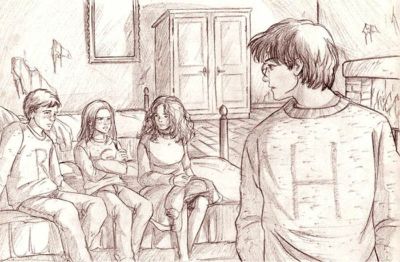 She anticipates Harry’s reactions at the first DA meeting at the Hog’s Head; soothing his anxiety and paving the way for him to comfortably assume the position of leadership (302). She bolsters his confidence with her praise at the first official DA session (351). When Harry is disconsolate and isolated after overhearing Moody speculating that Voldemort might be possessing him, it is Hermione who is able to persuade Harry to talk things out. She claims to have come to Grimmauld Place the minute she was permitted (and didn’t join her parents at all), rushing upstairs to the room where Harry was holed up within minutes of her arrival (there is still snow in her hair!) (440). Further, Harry notes that he is “surprised” to see Ron and Ginny sitting on his bed, so he obviously expected to have (and was amenable to having) a conversation about the situation with just Hermione on her own (441). He doesn’t “have the heart” to disappoint her by telling her what is really happening to all the hats she’s been making for the elves (399).
Rich History
Harry and Hermione have a rich history, and though that history is shared with Ron, select memories Harry has of Hermione specifically are highlighted to the reader in OP. We learn, for example, that the image of Hermione in the hospital wing when the Polyjuice Potion had gone awry is one of Harry’s “most feared memories.” And, thinking about Hermione can bring a smile to Harry’s face. In his first OWL exam, Harry spies Hermione a few rows ahead of him and fondly recalls the night in which he and Hermione became friends, the night he and Ron knocked out the Troll to save her (628). Accordingly, I believe that any romantic partner of Harry will have a difficult time “replacing” Hermione in his heart.
2. Conflict Resolution
Harry and Hermione are not “boring.” They do argue or disagree sometimes, but in almost every case, the disagreement is completely resolved by discussing the matter and apologizing as necessary. This is in contrast to Ron and Hermione, whose arguments in OP are never resolved on-screen; one or both parties always retreats into silence and/or avoids the other (72-73, 189-90, 208, 212, 228-230, 231, 264). There is one instance of Ron and Hermione “resolving” an argument off-page; the time when Harry blows up at them for always “having a go at each other” and storms off. In that instance, Ron shows up for Divination a bit later and pronounces that “me and Hermione have stopped arguing” (213). But, we don’t see that the argument is actually resolved (it may have just been a temporary truce), and it certainly doesn’t stop them from arguing with each other after that point.
There are instances in which Harry is angry enough with Hermione to retreat into silence for a period of time, but this is not a pattern of behavior. In one case, Harry is angry enough with her for siding at least partially with McGonagall to not speak to her during Charms but forgets about being cross with her by the time they reach the next class (285-86). He also is angry enough with her to stop speaking to her for the rest of the day when she pushed him on Occlumency again (519).
It is only rarely though that Harry retreats into silence rather than resolving his conflicts with Hermione. Harry essentially picks a fight with her over the issue of Lavender not believing him, and after Hermione calmly tells him that she told Lavender off but to please stop jumping down her throat, he apologizes (201). In a similar discussion shortly later, Hermione again is assertive and tells Harry to “stop biting her head off” (227). Though she may look anxious about it, her anxiety never stops Hermione from facing Harry’s anger at different times in the course of OP (293, 645-50, 686-87). And, she grows steadily more confident (and less anxious) about confronting Harry when she believes it’s necessary.
She isn’t afraid to tell him when he’s behaving poorly, and he likewise feels comfortable enough to tell her when she’s out of order. For example, after they’ve met Grawp for the first time, Harry tries to calm Hermione, who was very distraught at what Hagrid was asking them to do. When Hermione in turn became angry, to the point of saying that Umbridge was right to question Hagrid’s competency, Harry says quietly, “you didn’t mean that.” She agrees that Harry is right (617). As another example, Harry quietly asks if she does wish that she could see Thestrals; she is immediately horrified by what she’s said and apologizes for her insensitivity (398).
Harry is definitely annoyed with Hermione at different times in OP, but some conflict is definitely a normal and good thing in any relationship. In some cases, it is her logical and pragmatic nature that irritates him (327, 334-35). For example, when she questions whether continuing with the DA is advisable in light of Sirius’ support, Harry feels annoyed with her slur on Sirius’ judgment; however, he is thinking about her words later as he falls asleep, so he certainly takes her advice to heart even when he disagrees (334-335). In every other case, his annoyance with her centers on her tenacity on the occlumency issue (489, 519, 574, 600-601) or her opposition to his plan to break into Umbridge’s office to use her fire for his chat with Sirius (579-80, 582, 587-88).
He affirmatively hides his feelings about one of his Voldemort dreams from Ron and Hermione because “he didn’t want another telling-off from Hermione” (520). However, there is certainly not, as has been alleged, a pattern of behavior whereby Harry repeatedly lies to Hermione to avoid being nagged or lectured. In fact, in the single case where Harry has actively lied to Hermione (when he said he’d worked out the egg clue in GF) and in those cases where he failed to mention a detail or tell the entire story, he avoids her eye or doesn’t look at her or otherwise has a guilty reaction. In these cases, Harry is also lying to Ron, though his guilt seems to be Hermione-driven. One instance where Harry “lies by omission” in OP to both Hermione and Ron can be found at: 242-243 (he doesn’t tell them the full story about his detentions with Umbridge). When she’s pushing him on Occlumency, she asks him if he’s stopped having funny dreams, and he answers “pretty much” but doesn’t meet her eye (574). Harry tries to sound as though she’s insulting him by even asking if he’s continuing to work on his Occlumency, but he doesn’t quite meet her eye when he says this (601).
The overall pattern of how Harry and Hermione react to and resolve interpersonal conflicts contrasts sharply with the Ron and Hermione pattern. Harry doesn’t like conflict as evidenced by his angry outburst at them and subsequent thoughts about their incessant bickering (212) and by his thoughts that he didn’t care what happened between him and Cho as long as there were no more rows (603). I also don’t believe that Hermione is thriving on her conflicts with Ron either, but I’m not sure we have adequate canon-based evidence to make that evaluation fully since we don’t have Hermione’s perspective at all.
3. Concern for Each Other’s Safety and Well-Being
While Harry and Hermione both obviously place a high value on the safety, happiness and general well-being of their friends (Ron in particular), they show an especial concern for one another in OP. Ron himself says that Hermione was “going spare” with anxiety about what Harry might do, stuck alone without news (61). Though she professed to be confident that he would not be expelled, she looked “positively faint with anxiety and held a shaking hand over her eyes” when Harry tells them that he got off the charges (143).
They stick up for each other with particular ferocity in OP. Hermione reacts quite sharply indeed to Draco’s query of how Harry felt being “second-best” to Ron (“Shut up!” and “Get out!”): even Draco recognizes that he may have “hit a nerve” with her (175-176). Harry receives another detention for questioning why Umbridge was docking Gryffindor for Hermione’s question (284).
As tensions increase in the narrative, so too do Hermione’s anxieties. She tells Ron to go check on Harry after his first Occlumency lesson (476-478). She is very concerned by Harry’s scar hurting (144, 249, 489, 644, 651). As the DA members run from the Room of Requirement, Hermione looks back from the middle of the group, shouting at Harry to “come on!” (536). She cannot abide the thought of Harry suffering the Cruciatus Curse, and I’m not entirely convinced that she knew what she was going to do when she shouted “NO!” as Umbridge prepared to cast the curse on Harry (658). In other words, I think Hermione reacted with fierce emotional protectiveness of Harry and then formulated a plan as she went along. She also was particularly apprehensive about the veil and its dangers, as if by instinct (682-683).
If anything, Hermione may be overly anxious on Harry’s behalf, which annoys him from time to time, but I can’t help wondering if it’s important that Hermione mistranslates the word for partnership as “defense” (631).
Finally, it should be noted that Hermione disengages herself from her parents to join the group of Harry’s protectors who confront the Dursleys on the train platform (765).
4. Jealousy of Romantic Partners
Hermione’s romantic partner in GF (and possibly OP), Viktor Krum, is jealous enough of Harry’s relationship with Hermione to instigate a private conversation. Harry is amazed that this older boy and international Quidditch star considers him a rival. Then, Harry’s romantic interest in OP, Cho Chang, is jealous of Harry’s relationship with Hermione (494-96, 561). Even if friends don’t see a possible romantic pairing in the offing when they look at Harry and Hermione (though we don’t know if they do or don’t), it is indisputably clear that the romantic interests of both Harry and Hermione are jealous of the H/H friendship. They find it threatening; they suspect romantic interest between Harry and Hermione.
5. Physical Interaction
Harry does not find Hermione unattractive or ugly (GF 359-60, OP 505). In fact, at the Yule Ball, his jaw dropped in astonishment at Hermione’s appearance (GF 360). He had earlier considered this mysterious girl to be “pretty,” though he did not yet know that it was Hermione (GF 359). And, of course, he flat-out confirms that he does not find her “ugly” (505). The purpose of her even making the statement that Harry should have told Cho he thinks she, Hermione, is ugly: well, it sounds like she was fishing for compliments or at least testing the waters. We do not know specifically what Hermione might think about Harry’s appearance or whether she is or could be physically attracted to him. Of course, people don’t fall in love with every person they might believe is physically attractive, but since this seems to be one barrier to H/H speculated on by R/H types in the past, I thought it was worth including in this essay.
In any case though, Harry and Hermione show an increasing comfort level with physical contact in OP. Hermione hugs him for a fairly sustained period of time when he first arrives at Grimmauld Place (60-61). They are shown as seated next to one another at various points in OP (212, 221, 323, 498, 505, 638). This is interesting only in the sense that Rowling has specifically highlighted the seating arrangement in some manner. Hermione grabs or clings to Harry’s arm with a fair bit of frequency (323, 358, 614, 668, 679). Harry is described as being very physically protective of her as well. He “seizes her and pulls her behind a tree” (614) when Grawp takes a swipe at her. In the clash between Umbridge and the centaurs, Harry grabs Hermione and pulls her to the ground (665). In the Department of Mysteries when Harry needs to signal the others to smash the shelves, it is Hermione’s foot that he finds (692-93). In the ensuing crash, Harry grabs Hermione’s robes and drags her forwards: this has all the elements of “save one thing from a burning building” mentality on Harry’s part (694). When he thinks Hermione may be dead, there is a “whine of panic” inside Harry’s head (699). Learning that she is still alive, Harry feels such a “powerful wave of relief” that he feels light-headed for a moment (700).
6. Interest in Each Other?
How do Harry and Hermione view each other’s respective love lives? Well, clearly, Harry has spared no thought whatsoever on Hermione’s love life so far. His only commentary on Krum sounds more like Rowling talking to the reader through Harry, rather than something Harry himself would say (407). He does certainly recognize Ron’s interest in Hermione (GF 376), though he and Ron rather interestingly don’t seem to have any conversations about girls. Harry wishes at one point that he could ask Sirius’ advice, but he doesn’t seek out his male best friend’s opinion at all. Of course, if they did have a discussion about girls, Hermione would certainly come up, and it’s arguable that Rowling is avoiding that entire scenario for the time being.
Hermione might seem on the surface to be supportive of the Harry/Cho relationship; she even encourages him by mentioning that Cho couldn’t take her eyes off him at the Hog’s Head (311). But, on closer examination, it seems at least reasonable to be suspicious of why Hermione is so interested in Harry’s love life. For a “disinterested observer,” Hermione watches Cho from afar frequently and does quite a lot of thinking about Cho’s emotional state and interest in Harry. Hermione interrupts his conversation with Cho at the first D.A. meeting, by shouting to him to look at his watch. Obviously, she’d been watching Harry and Cho for at least a moment; did she interrupt them on purpose? (351)
 When Harry tells Ron and Hermione about his snog session with Cho, he does so only as a result of Hermione’s prompting. For her part in this conversation, Rowling used “business-like,” “brisk” and “impatiently” to describe Hermione’s manner. Those are odd descriptors to ascribe to an indifferent observer if you ask me. In addition, of course, Hermione is seen to be wearing a “slight frown” while waiting for Harry to confirm that he and Cho had kissed (404-406). She is all too happy to tell Harry what he’s done wrong on his date with Cho after-the-fact. But she doesn’t seemingly take the initiative to set Cho straight about her relationship with Harry (or Cho wouldn’t continue to be jealous), and we all know that Hermione can be meddlesome when it suits her (Firebolt, anyone?). She questions Harry about Cho at different times (575, 602), and of course, it is none other than Hermione who informs Harry that Cho is dating someone new (762). All in all, I’m not convinced that Hermione is as fully supportive of the Harry/Cho relationship as she appeared to be on the surface. This leaves open the possibility that Hermione has or will develop romantic feelings for Harry. Even if she has romantic feelings for Ron (which I don’t believe she does, though the purpose of this essay is not to be anti-R/H), this doesn’t preclude her from also having romantic interest in Harry or from developing those feelings later on.
In sum, I believe there is enough ambiguity in the relationships between all three members of the Trio to leave open a definite possibility for Harry and Hermione to develop a romantic interest in one another, even if it’s not currently overt for either of them. They have the emotional bond already, and they do find each other physically attractive (there’s nothing to suggest that Hermione doesn’t find Harry physically attractive anyway). It’s definitely true that they might well find other parties more appealing than each other (such as ..oh Ron for Hermione and Ginny for Harry), but it seems to me that the odds on Harry/Hermione pairing off are higher when one examines all the canon evidence as a whole.
Conclusion
I believe that OP dramatically accelerates the trend begun in PA and GF of Harry and Hermione working and acting as partners. While it is Harry who has the destiny to fulfill and the books are titled Harry Potter and the _____, I believe that Rowling intends us to view Hermione as more than just a “side-kick,” more than just a “secondary character.” I believe that Harry and Hermione working in tandem as they increasingly do is a solid basis on which a romantic relationship can be based in later books and/or in the epilogue to the series.
While it can be argued that Harry will end up paired with Ginny as more and more of her character is revealed to Harry and the reader, it is also firmly within literary tradition for an author to create incentives for a certain romantic outcome by making certain that the readers are emotionally invested in the potential love interest. In that case, Rowling has certainly spotlighted Hermione, both in terms of her individual accomplishments and strengths, and also as part of a dynamic partnership with Harry. By contrast, Ginny’s development has been sparse and is largely off-page (testimonials from her brothers and tidbits from Hermione), thereby creating a situation where a large number of readers are not at this stage emotionally invested in her as the hero’s love interest. Rowling used that technique already to make sure that readers were not emotionally invested in Cho as Harry’s romantic partner. She accomplished this by filtering Cho entirely through Hermione: virtually everything the reader learns or hears about Cho is related by Hermione. The reader isn’t given the chance to feel any romantic rush when Harry kissed Cho, as that first kiss was off-page. So, the reader doesn’t ever feel any connection to Cho. I believe she’s using this same technique with Ginny. And, I believe that she has made certain that readers are very emotionally invested in Hermione, though naturally not all readers want her paired up with the hero.
Even if you don’t buy into the notion that Hermione is the heroine of the series, it is indisputable that Harry and Hermione working together has been highlighted, particularly in the latest installment. As was shown above, in addition to being a formidable duo, Harry and Hermione have a friendship and emotional relationship that could easily form the basis for romantic interest. I believe that they are both subconsciously aware of an attraction for each other, though Harry certainly isn’t overtly aware of any latent feelings for Hermione. Because Hermione’s feelings are still ambiguous, it is hard to say whether she might be aware of any interest in Harry. But whether or not they have any current romantic feelings about one another, the stage is clearly set for that possible outcome.
Commentary
Pensieve (Comments)
Tags: shipping