

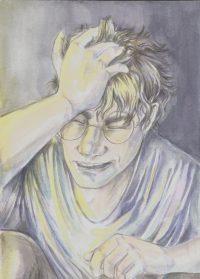
After thinking carefully through the various factors involved, I cannot help but conclude that the most logical scenario, based on all the available evidence, is that Harry is a Horcrux. I will structure this essay in four sections. First, I will discuss the background. Second, I will discuss the evidence indicating that Harryis a Horcrux. Third, I will discuss and hopefully, rebut the evidence that he is not. Fourth, I will speculate on how Harry actually came to be a Horcrux.
Background
We know (or can reasonably surmise) from the later chapters of Harry Potter and the Half-Blood Prince that Lord Voldemort made six Horcruxes (HBP23). This is not certain, as his comments to Professor Slughorn indicate that he was interested in making seven Horcruxes. Professor Dumbledore’s inference that this meant six plus Lord Voldemort’s own body, is not an obvious conclusion at all. However, for the purposes of this essay, I will assume Dumbledore’s conclusion and assume that there are only six Horcruxes in all. We know the following about them (see HBP23):
- Marvolo’s ring — destroyed by Dumbledore.
- Riddle’s diary — destroyed by Harry.
- Slytherin’s locket — stolen by “R.A.B.” (HBP28), presumably Regulus Black, who hid it at number twelve, Grimmauld Place (see OP6, where Harry and the others found, in number twelve, Grimmauld Place “a heavy locket that none of them could open”). Whether it’s still there or whether someone (for example, Mundungus Fletcher) took it out is an open question. Either way, it’s almost certainly at large.
- Hufflepuff’s cup (HBP20) — at large.
- An artifact of Gryffindor’s or Ravenclaw’s — according to Dumbledore’s guess.
- Nagini — according to Dumbledore’s guess.
For purposes of this discussion, I am ruling out the Sorting Hat and Gryffindor’s sword as possibilities. I think that Lord Voldemort wanted to obtain one of them, but this attempt was thwarted when Dumbledore rejected his application to become a teacher at Hogwarts (HBP20). I also think that Lord Voldemort would not have tried to steal one of them under Dumbledore’s nose, when we know how afraid he was of Dumbledore (OP36). In addition, the hat never showed any evil tendency and the sword helped Harry against the diary’s Tom Riddle (CS17). The only evidence that the hat may be a Horcrux is that it wanted to put Harry in Slytherin (PS7). However:
a) It was easily persuaded by Harry NOT do so (PS7); and
b) As I’ll discuss later, I think that was more about Harry than about the hat.
Reasons to believe that Harry is a Horcrux
1. One Horcrux May be a Relic of Gryffindor’s
Harry is almost certainly a Gryffindor descendant, between his parents living in Godric’s Hollow (PS1) and Gryffindor’s sword coming out of the Hat during his battle with Riddle (CS17). As Dumbledore tells Harry, “Only a true Gryffindor could have pulled [the sword] out of the hat, Harry” (CS18). Making Harry a Horcrux would satisfy Lord Voldemort’s wish to have a relic of each founder among his Horcruxes (HBP23).
2. Trophy
Lord Voldemort loved to make Horcruxes out of his trophies that commemorated significant murders (HBP23), and he attempted to murder Harry in Godric’s Hollow. There’s no doubt that killing the boy who was to have the power to defeat him based on the prophecy (OP37) would be a very significant moment for him. It was the perfect murder with which to make a Horcrux, and as discussed below, there is no reason to rule out the possibility of a corpse (Harry’s) being used as a Horcrux.
3. Parseltongue
Harry is a Parselmouth (CS11), but we know he is not descended from Slytherin (see, for example, CS18, when Dumbledore tells Harry that Lord Voldemort is the last remaining descendant of Slytherin). As discussed above, Harry is likely descended from Godric Gryffindor. Why then would he be a Parselmouth, unless the soul of a Parselmouth sits inside him?
4. The Hurting Scar
The scar hurting when Lord Voldemort is angry and at other times linked to Lord Voldemort’s experiences (GF1, and many instances in Order of the Phoenix) is, in the author’s opinion, a clear indication that a portion of Lord Voldemort’s soul rests inside Harry. Against this point and point #3, I know many will argue that Lord Voldemort’s backfired curse somehow connected him to Harry. However, JKR already thoroughly explained why Lord Voldemort was defeated that night in Godric’s Hollow: Lily’s sacrifice gave Harry protection and the curse rebounded (GF33). Moreover, the Killing Curse has been featured prominently in the narrative from Book 4 on and never has there been any inkling that it transfers a portion of the caster’s essence to the victim (GF14). While it is possible that this fact could be established in Book 7, I do not think it’s JKR’s style to suddenly change the rules about the Killing Curse.
5. The Possession
Lord Voldemort possesses Harry at the end of the Battle of the Department of Mysteries (OP36). This is done without any apparent spell and is done remotely, without Lord Voldemort having any direct physical control over Harry at the time (OP36). Although Lord Voldemort is extremely powerful, I do not believe he has the power to possess people at will. Otherwise, why doesn’t he just possess people all the time to get out of danger? I fail to believe that JKR created a World where people can simply take over other people’s minds at will, as defeat of a wizard with this skill in such a World would be all but impossible. I conclude that the only reason Lord Voldemort was able to possess Harry is because he was able to link his consciousness with the fragment of his soul in Harry.
6. The Scar Itself
There is no reason conclude that a Killing Curse leaves a mark on its victim. To the contrary, the books indicate that the Killing Curse leaves no sign other than that the person is dead (see, for example, GF14, when the impostor Moody’s Killing Curse leaves no apparent mark on the spider; and GF32 when, after Cedric Diggory is killed by the Killing Curse, JKR describes his body and makes no mention of any special mark). Why, then, would a rebounded curse make a scar? Perhaps the magic that creates a Horcrux, on the other hand, leaves a symbol on the object.
7. Nagini
Dumbledore deduces that Nagini is a Horcrux, and was made a Horcrux at the time of the murder of Frank Bryce (HBP23). Dumbledore says that a major reason for this suspicion is the level of control Lord Voldemort has over Nagini. However, it appears from the opening chapter of Goblet of Fire that Lord Voldemort had firm control over Nagini before Frank Bryce was killed and thus before Lord Voldemort could possibly have made her into a Horcrux (GF1). I think that Dumbledore’s statement about Nagini may be a red herring. Nagini may not be a Horcrux at all. Maybe JKR told us this tidbit to let us know that it was possible for a living thing to be a Horcrux. Or maybe Dumbledore suspected that Harry may be a Horcrux but didn’t want to tell Harry for fear of making him despair.
8. Lord Voldemort Did Not Order Malfoy or Anyone Else to kill Harry in Half-Blood Prince
If Lord Voldemort could order Draco Malfoy to kill Dumbledore (HBP27), then why couldn’t he have given him the much simpler task of killing Harry? In addition, near the end of Half-Blood Prince, the Death Eaters seem to avoid killing Harry because he should be “left to the Dark Lord” (HBP28). One possible reason is that Lord Voldemort does not want Harry killed by his Death Eaters. He either wants Harry alive or, as discussed in the next section, he needs to make sure he has control over Harry’s corpse.
Reasons to Believe that Harry is NOT a Horcrux and Counterarguments
1. Lord Voldemort Wanted to Kill Harry on Hallowe’en 1981
The most obvious argument against Harry being a Horcrux is that Lord Voldemort went to Godric’s Hollow that night intending to kill Harry (GF33). Why would Voldemort have made Harry a Horcrux if he intended to kill him?
This question assumes something that almost all analyses I’ve seen take for granted: that killing a person in which a Horcrux resides also destroys the Horcrux. But is that so obvious? As noted earlier, the Killing Curse kills the person but seemingly does nothing to a person’s body. Remember also that mostHorcruxes are inanimate objects (HBP23). Why can’t a human corpse be a Horcrux? And if a living person is a Horcrux, who says his or her death eliminates it?
2. Lord Voldemort Keeps Trying To Kill Harry
The next thing people will point out is that when they have met subsequently to the night at Godric’s Hollow, Lord Voldemort has wanted to kill Harry, so Harry can’t possibly be the Horcrux. This, of course, makes the same questionable assumption that killing Harry would destroy the Horcrux.
This objection also assumes that Lord Voldemort’s intentions towards Harry have been unwavering. But he might have changed his mind; he might originally have intended Harry to remain a living Horcrux but later decided that killing Harry was worth destroying the Horcrux because of all the trouble Harry’s caused and because of the prophecy. Consider that in their meeting at the end of Philosopher’s Stone, Lord Voldemort says nothing about killing Harry, only using him to get the Philosopher’s Stone; he even tries to convince Harry to join him (PS17). Only when he sees no other way to get the stone does he order Professor Quirrell to kill Harry (PS17).
In Goblet of Fire, Lord Voldemort toys with Harry, perhaps hoping that Harry will volunteer to join the Death Eaters (GF33, 34). Only in Order of the Phoenix, after Harry has foiled Lord Voldemort once too often, does Lord Voldemort try to kill him immediately (OP36). I think it’s safe to say, at that point, Lord Voldemort may be thinking that sacrificing the Horcrux is worth getting rid of Harry.
3. Dumbledore’s Analysis
Another argument against the theory is that Dumbledore doesn’t think of it at all (HBP23). Why would Dumbledore miss that possibility if it’s so apparent to me?
As I alluded to before, I think it’s possible that Dumbledore did know or suspect that Harry was a Horcrux, but did not see the point of disclosing that to Harry. Think of how that information would devastate him. Also, knowing that he may have to take some drastic step to kill Lord Voldemort in the end (such as suicide if that were the only way to get rid of the Horcrux) might make Harry very upset or make him give up on fighting Lord Voldemort entirely.
Conclusion: What Happened in Godric’s Hollow?
So, what did happen that night at Godric’s Hollow?
Theory 1
When Lord Voldemort went to Godric’s Hollow, he intended to kill James and make Harry a Horcrux, created by James’s murder. Afterwards, he intended to kill Harry and keep his corpse, with the Horcrux intact. Not understanding the power of love, he never imagined that Lily would stand in his way once he made it clear to Lily that he had no interest in killing her.
After Lord Voldemort killed James, he wanted to perform the Horcrux-making spell on Harry, but Lily would not allow it. This also explains why he asked Lily to “stand aside” rather than using a spell to move her aside: presumably, he had to create the Horcrux immediately after performing the murder it was linked to (that is, James’s murder). When Lily would not budge, he killed Lily and made Harry a Horcrux, using Lily’s murder instead. He then tried to kill Harry and the rest is history. The weakness of this theory is, of course, that it assumes not only that a Killing Curse leaves a Horcrux intact, but that Lord Voldemortintended to perform a Killing Curse on a person already holding his Horcrux.
Theory 2
Lord Voldemort intended to use James’s corpse or some other object as the Horcrux which would be established by Harry’s murder. I think it’s a reasonable assumption that at least part of the Horcrux-making spell has to be performed before the murder. Lord Voldemort started the Horcrux spell in motion, aiming to finish it after Harry was dead. When Lord Voldemort’s Killing Curse rebounded, he was “ripped from his body” (GF33). Perhaps that was enough to constitute a murder for Horcrux-making purposes. Lord Voldemort had “killed” someone — himself — and the Horcrux spell, which was already in motion, continued and found the nearest available target, Harry. The part of Lord Voldemort’s soul that was ripped off when he enacted the Killing Curse went into Harry, while the rest of his soul was ripped from his body and driven out. The other possibility is that Wormtail or some other Death Eater accompanied him that night and was able to finish off the Horcrux spell after Lord Voldemort had been driven away.
In any case, that means that the Horcruxes are most likely:
- Marvolo’s ring
- Riddle’s diary
- Slytherin’s locket
- Hufflepuff’s cup
- Harry, representing a relic of Gryffindor
- Nagini or an artifact of Ravenclaw’s.
Commentary
Notes
Voldemort also possessed Ginny Weasley, as the memory of young Tom Riddle. See CS17, where Tom Riddle brags that the consequences of Ginny baring her soul to him by writing in his diary was that eventually he became strong enough to start “pouring a little of my soul back into her.”