


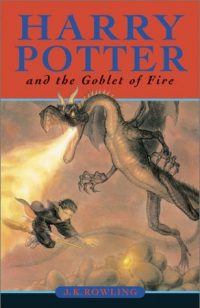
Harry Potter and the Goblet of Fire, the fourth book in the series, was published in 2000. For the first time, bookstores held midnight release parties. The Harry Potter phenomenon was in full swing. Unfortunately, the scene in the graveyard provoked a strong anti-Potter response from some conservative Christian groups who tried to get the book banned from a number of schools and libraries.
Its working title was Harry Potter and the Doomspell Tournament (EW)
The book was published simultaneously in the UK and in the US on July 8, 2000.
Resources:
- day by day calendar of events in the book
- differences between the British and American versions
- edits and changes to the text
Reader’s Guide to Harry Potter and the Goblet of Fire
a complete chapter-by-chapter guide with notes and commentary
In which we learn of the mysterious murders in the Riddle House fifty years ago, how Frank Bryce was accused but released for lack of evidence, and how the Riddle House fell into disrepair. In the present, Frank interrupts a sinister meeting and is killed when he overhears Voldemort’s plans.
In which Harry awakens from a bad dream, his scar burning, we recap Harry’s previous adventures, and he writes a letter to his godfather.
In which Dudley and the rest of the Dursleys are on a diet, and the Dursleys get letter from Mrs. Weasley inviting Harry to stay with her family and attend the World Quidditch Cup finals.
Chapter 4 – Back to the Burrow
In which Harry awaits the arrival of the Weasleys, who come by Floo Powder and get trapped in the blocked-off fireplace, blast it open, send Fred and George after Harry’s trunk, then Floo back to the Burrow. Just as Harry is about to leave, Dudley eats a magical toffee dropped by Fred and grows a huge purple tongue. Harry Floos away to leave Mr Weasley to sort it out as Uncle Vernon starts throwing ornaments.
Chapter 5 – Weasleys’ Wizard Wheezes
In which the Weasleys return home, Fred and George are reprimanded by Mr and Mrs Weasley for giving Dudley the toffee, we learn more about the Weasley clan, and they have dinner in the garden.
In which Apparation is discussed, Fred and George are caught with toffees, and everyone sets off via Portkey for the World Cup site.
In which they arrive at the campsite, erect their tent, tour the camp, meet Ludo Bagman (with whom Fred and George bet on the match), and excitement rises as game time draws near.
Chapter 8 – The Quidditch World Cup
In which the spectators take their seats, Harry meets Winky (house elf for Barty Crouch), the Malfoys, and Mr. Oblansk (the Bulgarian Minister for Magic). The pre-game show features the Bulgarian and Irish team mascots, followed by the introductions of the teams, and the game begins. Ireland takes an early lead and eventually wins despite repeated Bulgarian fouls and Krum catching the snitch. Fred and George win their bet with Bagman.
In which Harry dreams about Quidditch, some wizards run amok, Ministry wizards attempt to stop them, and Harry, Ron and Hermione hide in the forest, encountering Draco Malfoy along the way. Harry discovers that he has lost his wand. Harry, Ron and Hermione meet Bagman, hear noises in the forest, and see the Dark Mark. Ministry wizards arrive and shoot Stunning Spells in every direction, hitting Winky, whom they blame for conjuring the Dark Mark (though they soon realize that this is unlikely).
Chapter 10 – Mayhem at the Ministry
In which they Portkey back to the Burrow, Harry tells Ron and Hermione about his dream, Mr Weasley returns home to report problems with Rita Skeeter’s articles in The Daily Prophet, and Harry, Ron and Hermione prepare to return to Hogwarts.
Chapter 11 – Aboard the Hogwarts Express
In which Mad-Eye Moody jinxes dustbins, Mr Weasley hustles off to sort out the mess, Mrs Weasley takes the children to the train station via Muggle taxis, and Harry, Ron and Hermione meet old friends and enemies on the train.
Chapter 12 – The Triwizard Tournament
In which the students arrive at Hogwarts in a gale, are soaked by Peeves’ water balloons, the First Years are sorted, and Hermione discovers that there are house elves at Hogwarts. Moody is the new DADA teacher, Dumbledore announces the Triwizard Tournament, and Fred and George decide to enter despite being underage.
In which the fourth-year students gather Bubotuber pus in Herbology, study Blast-ended Skrewts with Hagrid, study Astrology in Divination, and Malfoy delights in pointing out that Mr Weasley is in the paper again. In the argument that follows, Malfoy attacks Harry, but Moody turns Malfoy into a ferret, bouncing him around the hall until McGonagall stops him.
Chapter 14 – The Unforgivable Curses
In which the fourth-year students learn about the Unforgivable Curses in their first lesson with Moody, Moody takes Neville to his office, Harry and Ron fake their Divination homework, Hermione starts SPEW, and Harry receives a letter from Sirius saying he’s returning to Britain.
Chapter 15 – Beauxbatons and Drumstrang
In which Harry sends an owl to Sirius telling him everything is fine. In DADA, Moody puts the Imperius curse on everyone and only Harry can resist it, school work piles up, Hogwarts spruces up for the visitors, Hermione continues her elf rights campaign, a message via Hedwig announces that Sirius is back in the country, and the Beauxbatons and Durmstrang students arrive by flying carriage and submerged ship respectively.
Chapter 16 – The Goblet of Fire
In which all learn about the Triwizard Tournament after dinner in the Great Hall. Next morning Fred and George fail to fool the Goblet of Fire. Harry, Ron and Hermione visit Hagrid, discovering that he fancies Madame Maxime of Beauxbatons. After the Hallowe’en feast, the Goblet chooses the champions – Viktor Krum for Durmstrang; Fleur Delacour for Beauxbatons; Cedric Diggory for Hogwarts..and a fourth champion – Harry Potter.
Chapter 17 – The Four Champions
In which the Triwizard judges try to decide how Harry was selected, argue and finally accept the fact. Few believe that Harry did not enter his own name; Ron is not one of the few.
Chapter 18 – The Weighing of the Wands
In which Hermione tries to help Harry, persuading him to write to Sirius. The other houses are no longer friendly to Harry, but he finds an ally in Hagrid. As the situation in school grows worse, Malfoy taunts Harry into throwing a curse; Malfoy responds, the curses clash, and hit Goyle and Hermione. Harry is called out of Potions for the Weighing of the Wands and meets Rita Skeeter, who is covering the ceremony. Later in the day, an owl arrives from Sirius asking Harry to meet him.
Chapter 19 – The Hungarian Horntail
In which an article by Rita Skeeter fuels the taunts of the students against Harry and Hermione. Hermione tries and fails to reunite Harry and Ron. Harry hides under his Invisibility Cloak to accompany Hermione to Hogsmeade, but Moody sees him anyway. Hagrid asks to meet Harry at midnight, when he reveals the dragons of the First Task. Back in the common rom, Sirius issues some warnings through the fire.
Harry and Hermione unsuccessfully try to find a spell to use against dragons. Harry warns Diggory about the dragons, the fake Moody gives Harry a hint, and Hermione helps Harry learn to cast a Summoning Charm. The first task is to get past a dragon and collect a golden egg; each champion succeeds in turn, Harry being the quickest. Ron and Harry finally make up, and Bagman tells the champions that the clue to the next task is in each golden egg.
Chapter 21 – The House-Elf Liberation Front
A surprise party is held for Harry, he opens the egg, and Hermione discovers how to get into the kitchens. In Care of Magical Creatures, the Blast-ended Skrewts rebel against hibernation, Rita arranges an interview with Hagrid, and Harry, Ron and Hermione go to the kitchens where they find Dobby and Winky.
Chapter 22 – The Unexpected Task
In which the Yule Ball is announced, and Harry learns that he is expected to have a dance partner. Harry tries to get up the nerve to ask Cho to the dance, but when he finally does finds that she already has a date with Cedric, so Harry arranges to go with Parvati Patil instead.
In which an owl arrives from Sirius, Dobby startles Harry on Christmas morning, presents are opened, the boys have a snow ball fight, and all prepare for the Yule Ball. Emotions run high as Ron is angry with Hermione for consorting with Krum, and Harry and Ron overhear secrets of Snape and Hagrid.
Chapter 24 – Rita Skeeter’s Scoop
In which past arguments are forgotten, and Hagrid is replaced as CMC teacher when Rita Skeeter writes a defamatory article about him. Harry, Ron and Hermione try but fail to visit him. Harry, Ron and Hermione encounter Bagman in Hogsmeade, where Harry rejects his offer of help with the Tournament. Rita arrives and is verbally assaulted by Harry and Hermione, who then go to Hagrid’s cabin, finding Dumbledore there, and together they persuade Hagrid to return to work.
Chapter 25 – The Egg and the Eye
In which Harry works on solving the secret of the Egg in the prefects’ bathroom, is helped by Moaning Myrtle, sees Crouch on the Marauder’s Map, gets stuck in the stairs, barely escapes being caught by Snape, and Moody borrows Harry’s map.
In which Harry, Ron and Hermione discuss the situation in Charms class, Harry, Ron and Hermione search for spells to help with the Second Task, and Hagrid returns to CMC class. Harry continues his spell all through the night before the Second Task, to be awakened by Dobby who gives him Gillyweed to breathe underwater. Harry performs the Second Task: to recover from the merpeople what was taken from each Champion. Harry rescues Ron and Fleur’s sister, tying with Krum on points.
In which Ron becomes a celebrity, Skeeter writes an article about Hermione, Snape reads it in class, Harry overhears Snape and Karkaroff, and Harry, Ron and Hermione meet Sirius outside Hogsmeade, learning about Barty Crouch’s son dying in Azkaban.
Chapter 28 – The Madness of Mr. Crouch
In which Harry, Ron and Hermione visit the kitchens again, Hermione upsets Winky, and Harry sends owls with food to Sirius, Hermione gets threatening letters by owl, Hagrid has Nifflers in CMC, more hate mail arrives, Harry learns that the Third Task involves a maze, Krum asks Harry about his relationship with Hermione, Crouch appears (bloody, bedraggled and incoherent), Harry goes for Dumbledore but Crouch apparently attacks Krum and runs off.
In which Harry, Ron and Hermione discuss Crouch, Fred and George discuss blackmail, and Moody discusses Crouch. Harry prepares for the Third Task, dreams of Voldemort in Divination, and reports to Dumbledore.
In which Harry, left alone in Dumbledore’s office, sees some glimpses of the past in Dumbledore’s Pensieve: Karkaroff giving evidence before a court of wizards, Crouch’s son being sentenced to Azkaban. Harry tells Dumbledore about his dream, and the headmaster speculates on its meaning.
In which Harry tells Ron and Hermione about the visit to Dumbledore’s office, Harry practices for the Third Task, Skeeter writes another article about Harry, and Hermione finally figures out how Rita gets her information. Mrs Weasley and Bill arrive to watch Harry in the Tournament, the four champions enter the maze, monsters are met, Fleur screams, and Krum apparently attacks Cedric. Harry meets a sphinx and solves a riddle, only to be attacked by a huge spider. Harry and Cedric agree to grasp the Cup at the same time, tying for the win.
Chapter 32 – Flesh, Blood, and Bone
In which Harry and Cedric are transported to a graveyard, encountering Voldemort. Cedric is killed, Harry is tied to Riddle’s tombstone, and Wormtail resurrects Voldemort.
In which Voldemort summons the Death Eaters, chastises them, and reveals his plans, explaining how he came back to life.
Chapter 34 – Priori Incantatem
In which Voldemort tries again to kill Harry but their spells clash, shades of Voldemort’s victims emerge from his wand, and Harry escapes through the Portkey.
In which Harry returns to Hogwarts, telling Moody what happened while returning to the castle. Moody divulges that it was he who put Harry’s name in the Goblet. Dumbledore, McGonagall and Snape arrive in time to prevent Moody from killing Harry. Dumbledore blasts Moody, sends Snape and McGonagall on errands, and opens the seven-locked trunk to reveal the real Moody in an underground pit. As the Polyjuice Potion wears off, the fake Moody is revealed as Crouch’s son, who tells all when questioned under Veritaserum.
Chapter 36 – The Parting of the Ways
Harry tells his story to Dumbledore and Sirius, then is turned over to Madam Pomfrey. Meanwhile, Fudge allows a Dementor to Kiss Crouch. Fudge argues with Dumbledore about what has happened, refusing to believe Voldemort is back, refusing to take measures against him. Dumbledore dispatches those loyal to him on various errands.
In which the school returns to normal, Harry, Ron and Hermione visit Hagrid, and the Leaving Feast takes place, at which Dumbledore tells the students of Cedric’s death and warns them about Voldemort’s return. Goodbyes are said, and on the train home, Hermione reveals the captured Skeeter (a beetle) in a jar. Malfoy and his cronies arrive to taunt Harry, Ron and Hermione but are blasted by hexes. Harry gives his winnings to Fred and George to start a joke shop.
Calendar and Dates
The story begins in July, 1994 and ends in June, 1995.
Dedication
To Peter Rowling,
in memory of Mr. Ridley
and to Susan Sladden,
who helped Harry
out of his cupboard.
Interesting facts and notes
Other media versions:
audiobooks
Stephen Fry (U.K. version)
Jim Dale (U.S. version)
film (Warner Bros. - November, 2005)
video/DVD
video games (Electronic Arts)
There are a number of inconsistencies in the book.
In Chapter 8, Ludo Bagman welcomes everyone to the "four hundred and twenty second Quidditch World Cup." However, Quidditch through the Ages sets forth the history of the World Cup competition. It says that the Cup was first held in 1473, and held every 4 years since. That means that the Cup had been held around 130 times by 1994. Not even close to 422.
Also, if the Cup had been held every four years from 1473, then 1993 and 1997 would be Cup-years, not 1994, which is a problem with the official time line. This problem was resolved when Rowling wrote the Daily Prophet reports about the 2014 Quidditch World Cup which appeared on Pottermore.
The now-infamous "Wand Order Problem" was corrected in later editions of the book. In the original version, when the Reverse Spell Effect happened in the graveyard, James Potter's image came out before Lily's. Since the spells were happening in reverse, that would mean that James died after Lily during Voldemort's attack in Godric's Hollow. Although everything in the GF text clearly points to Lily coming out last, the passage was rather clumsily changed in later editions to have Lily come out first. That is now the official version of the events.
There are problems with dates and times in various places in the book. Amy Z explains these problems in her introduction to the GF calendar.
Other mysteries and puzzles with which the reader is left at the end of book:
- Where did Snape go at the end of the book?
- Do the Hogwarts toilets really empty into the lake? Don't the merpeople object?
- What's up with that "gleam of triumph" in Dumbledore's eye when he heard that Voldemort had used Harry's blood in his rebirthing ceremony?
- Why did just having that Tournament mean no one got to play Quidditch for an entire year?
- Why did everyone turn out to watch the Second and Third Tasks when there was no way they could see anything?
- How did Crouch Jr. learn the powerful magic he used when he went to Azkaban when he was still a teenager?
JKR discovered a serious flaw in the story as she worked on this book. Here's what she said about it in an interview (SN):
Q: You mentioned something in a recent interview about a flaw in Book 4...
A: Did I? Oh yes. . .I repaired it! This is why Book 4 nearly caused me a nervous breakdown - because for the first time ever I lost my careful plot - which I've had since 1994, I think. I really should have gone through it with a fine toothcomb before I started writing and I didn't. I had a false sense of security because all my other plans had held up so well. So I sailed straight into the writing of Four, having just finished Azkaban. I had written what I thought at the time was half the book - it turns out now to have been about a third of the book - and I realised there was this big hole in the middle of the plot and I had to go back and unpick and redo. That's part of the reason it's longer than I thought it was going to be.
Q: Can you say what the flaw was, or would that spoil things ?
A: No, because that would ruin it.JKR: "The worst ever [rewriting] was thirteen different versions of one chapter (chapter nine in Goblet of Fire). I hated that chapter so much; at one point, I thought of missing it out altogether and just putting in a page saying 'Chapter Nine was too difficult' and going straight to Chapter Ten." (CR)
Other comments about book four by Rowling:
Q: Now, Book Four. Very scary ending. How difficult was it to write that?
A: The first time ever, I cried while writing. I actually cried twice during the ending of Book Four. It's a powerful ending, but there's a reason why - something VERY important happens. I have said all along that if you're writing about evil you should have enough respect for children to show them what it means. Not to dress up a pantomine villain and say, isn't it frightening?, when it isn't. It's the ending I planned and I was very happy when I re-read it (Nr).Note: According to an interview with ___, she cried when she wrote the passage where Dumbledore exhorts the students to remember Cedric Diggory when they're faced with the choice between what is right and what is easy.Q: And how vital is Book Four in the 7 book series for Harry?
A: Crucial. Book Four's a very very VERY important book. Something very important happens in Book Four. But also, it's literally a central book. It's almost the heart of the series, and it's pivotal. It's very difficult to talk about all seven books. I can't wait until the day when someone's read all seven and I can talk completely freely about them, but it's a very important book.I changed my mind twice on what [the title] was. The working title had got out — "Harry Potter and the Doomspell Tournament." Then I changed "Doomspell" to "Triwizard Tournament." Then I was teetering between "Goblet of Fire" and "Triwizard Tournament." In the end, I preferred "Goblet of Fire" because it's got that kind of "cup of destiny" feel about it, which is the theme of the book. (EW)
The fourth is a very, very important book. Well you know because you read it, something incredibly important happens in book four and also it's literally a central book, it's almost the heart of the series, and it's pivotal. It's very difficult to talk about and I can't wait for the day someone's read all seven and I can talk completely freely about it. But it's a very, very important book. (Nr)
Awards
Scottish Arts Council Book Award 2001, Children's Book Award in 9-11 category 2001, Winner of the Hugo Award, Whitaker's Platinum Book Award 2001
On July 8, U.K. publication day of Goblet of Fire, an astonishing 372,775 hardback copies were sold. In the US-where Rowling is believed to be the first author ever to occupy the top three slots on The New York Times best-seller list at the same time-a nation of bleary-eyed children stayed up for the midnight launch to snaffle 3.8 million volumes." (Reader's Digest December 2000 "J.K. Rowling: The Wizard Behind Harry Potter" by Tim Bouquet)
Characters Introduced
Book 4 — Goblet of Fire
Commentary
From the Web
Harry Potter and the Goblet of Fire on Wikipedia
Pensieve (Comments)
Tags: competitions/competitors