"It's hard to stop Muggles from noticing us if we're keeping dragons in the back garden - anyway, you can't tame dragons, it's dangerous."
-- Ron Weasley (PS14)
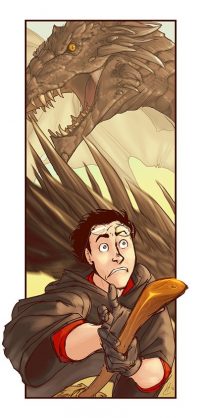
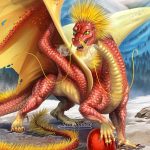
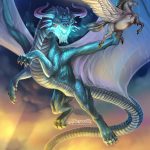
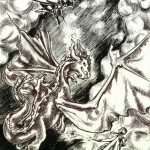
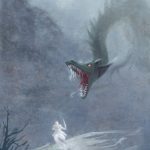
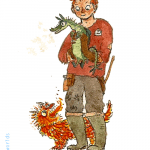
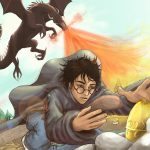
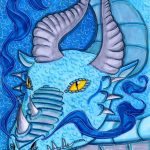
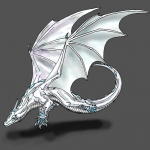
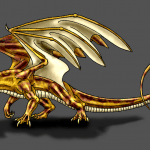
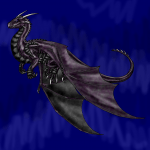
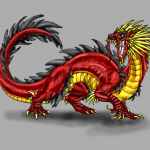
Dragons, winged fire-breathing lizards the size of a city bus, are the one of the most amazing magical creatures in the world. Dragons are terrifying and awe-inspiring as they take wing and breathe fire. Muggles remember them only as beasts from mythology, which is a credit to the ongoing efforts of the Ministries of Magic in many countries who work tirelessly to keep these huge beasts hidden.
Typically, dragons are found in mountain habitats, though there are exceptions (FB).
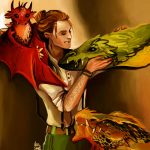
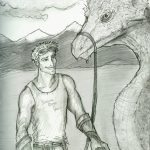
Wizards who work with them are called dragon keepers (Charlie Weasley is a dragon keeper in Romania). Gringotts Bank employs dragon feeders to tend to their resident dragons. It's a dangerous job, apparently, since the advert requires that applicants give next of kin (DP2). Those who study dragons are called Dragonologists (JKR).
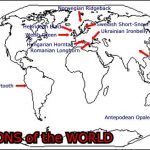
Fantastic Beasts and Where to Find Them lists ten breeds of dragons in the world, but several more appear in other sources:
- Romanian Longhorn
- Antipodean Opaleye
- Hebridean Black
- Swedish Short-Snout
- Chinese Fireball
- Ukrainian Ironbelly
- Hungarian Horntail
- Peruvian Vipertooth
- Catalonian Fireball
- Portuguese Long-Snout
- Welsh Green
- Norwegian Ridgeback
Useful materials from dragons:
bladder
An inflated dragon's bladder was used in the ancient game of Stichstock. (QA2)
blood
There are twelve uses for dragons' blood, as discovered by Albus Dumbledore (PS6), and taught to first-year students (PS14). The twelfth use is oven cleaner (SFC).
dung
Dragon dung is sold by the barrel in Knockturn Alley (CS4). This may be related to its use as compost in Herbology.
Great for sending to Percy Weasley at the Ministry of Magic as, uh, an example of fertilizer. Yeah, that's it (GF5).
eggs
Dragon eggs are defined as Class A Non-Tradeable Goods (FB). However, Chinese Fireball eggshells are highly prized as potion ingredients.
Hagrid acquired a Norwegian Ridgeback egg from someone in a pub and hatched it in his hut. His wooden hut.
heart
Heartstring is used in wands as a magical core substance (GF18).
hide
Dragon hide is used to make clothing, often where Muggles would use leather, and particularly where the clothing is intended to double as protective gear. Dragon hide is in use to make boots (GF5), gloves (PS5), jackets (OP38, HBP30), and shields (FB). Swedish Short-Snout skin is particularly sought-after (FB).
horn (powdered)
Romanian Longhorn horns are a Class B Tradeable material (FB).
liver
16 sickles an ounce in Diagon Alley. (original editions of PS 5 say 17 sickles, corrected 2004 to 16 sickles).
Other facts about Dragons
- Dragon breeding was outlawed by the Warlocks' Convention of 1709 (PS14).
- Fiendfyre creates dragons made of magical fire (DH31).
- Gringotts Bank employs dragon feeders. The position includes fireproof robes and pays 7 Galleons per week (DP2).
- The single largest Memory Charm cast in recent memory (1932) was required because of a dragon swooping down on a beach filled with Muggle holidaymakers (FW, FB).
- The Great Fire of London in 1666 was probably started by a young Welsh Green Dragon kept in the basement of the house in Puddling Lane (JKR-W3).
- The variety of cheese known as "dragon's milk cheese" is undoubtedly made not with the milk of actual dragons but with the strong beer sometimes called "dragon's blood" (JKR).
- Draco Malfoy's fist name comes from the constellation The Dragon ("Draco" in Latin) (Pm).
- Newt Scamander, for a time, worked in the Dragon Research and Restraint Bureau at the Ministry of Magic (FB). He also spent World War I working with Ukrainian Ironbelly dragons on the Eastern Front (WFT).
- A dragon was mentioned in a song heard by Newt Scamander and his friends at the speakeasy known as the Blind Pig in 1926 New York:
"The phoenix cried fat tears of pearl
When the dragon snapped up his best girl,
And the Billywig forgot to twirl
When his sweetheart left him cold,
And the unicorn done lost his horn,
And the Hippogriff feels all forlorn,
’Cause their lady loves have upped and gawn,
Or that’s what I’ve been told—" (WFT)
Dragon reservations:
Romania: research center, many types of dragons live there. The center and the reservation were founded by dragonologist Harvey Ridgebit (JKR). Charlie Weasley is a dragon keeper in Romania, possibly at this center..
Hebrides: the MacFusty clan traditionally cares for their native dragons
Wales: in the higher mountains
Sweden: between Arjeplog and Kopparberg, the annual broom race goes right through it (QA2).
Commentary
Notes
Related images: